
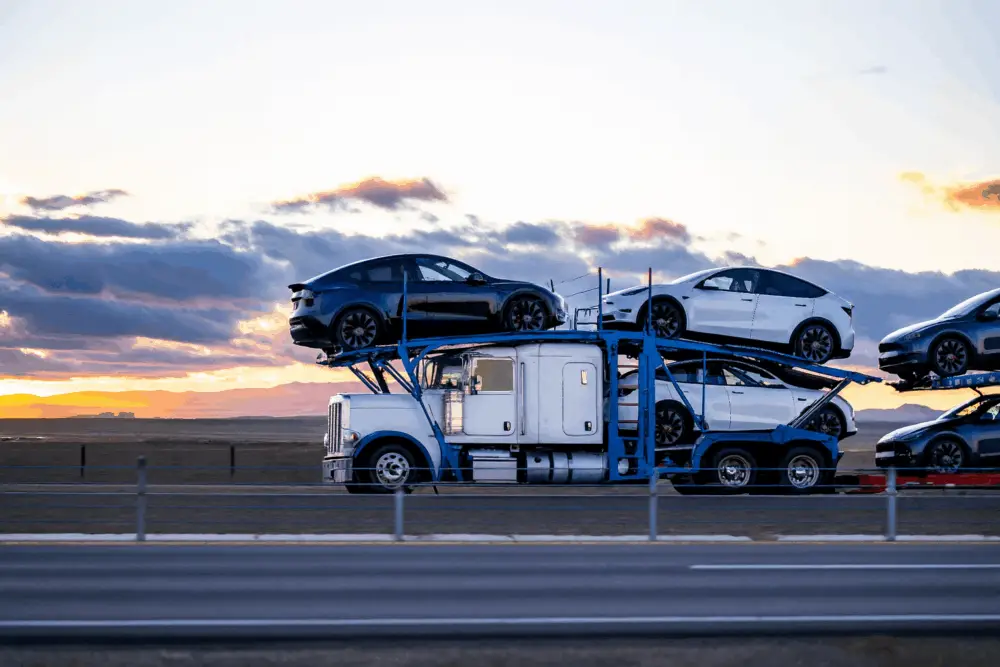
How Auto Transport Works
Written by Richard Avery, President of Smart Auto Move · USDOT 2887232 · MC 969368
Auto transport works in six stages: you get a quote, you pick open or enclosed, you book and receive a pickup window, a driver inspects and loads the car, one truck carries it the whole way, and you check it against that same inspection at the far end. The whole thing usually takes one to three weeks from the day you call. Most of that is the pickup window, not the driving, and that is the part almost nobody explains properly.
How does auto transport work, start to finish?
Six stages, in the order they happen, with how long each one really takes. Everything further down the page is one of these six explained properly.
| Stage | What happens | How long |
|---|---|---|
| 1. The quote | Both zip codes, the vehicle, whether it runs, and your earliest date | About a minute online |
| 2. Open or enclosed | Open for an everyday car, enclosed for a classic, an exotic or fresh paint | One decision |
| 3. Booking | You name a start date and get a collection window; a carrier is assigned to your order | Usually a few days |
| 4. Pickup THE IMPORTANT ONE | The driver inspects the car with you and records it on the Bill of Lading, then loads | About 30 minutes |
| 5. The road | One truck, the whole way, no depot and no handover | 1 to 10 days by distance |
| 6. Delivery | You check the car against the pickup report, sign, and pay the balance to the driver | About 30 minutes |
The part people get wrong. Almost everyone assumes the driving is the long bit. It is not. On a typical order the car is on the road for three or four days and the collection window is six. Your total time is mostly the wait for the right truck, which is why flexible dates save more money and more time than anything else you can do.
Stage one: getting a car shipping quote
Five things set your price, and you control two of them.
What a car shipping quote needs from you
Both zip codes, the year, make and model, whether the car runs, and the earliest day it can go. That is the whole list. Two minutes in the calculator or one phone call.
What sets the auto transport price
Distance first, then vehicle size, then how busy the route is, then the season, then how flexible your dates are. A pickup truck takes more deck space than a sedan and prices accordingly.
The two auto transport factors you control
Your dates and your addresses. A three or four day window rather than a single morning genuinely changes the number, and an address a truck can reach easily beats one it cannot.
What car shipping actually costs. Roughly $450 to $900 under 500 miles, $900 to $1,600 from 500 to 1,500 miles, and $1,600 to $2,500 past 2,500 miles, for an operable mid-size vehicle on an open trailer. Those are national bands and your route may sit above or below them. The full cost guide has real published routes with distances and transit times against each one.
Stage two: choosing open or enclosed auto transport
Nine out of ten cars go on an open trailer, and for most people that is the right answer without much thinking.
Open auto transport
Nine or ten cars on an uncovered double-deck trailer. It is exactly how dealerships receive new stock, which is the most useful thing to know about it. There are far more open trailers on the road than enclosed ones, so an open order also schedules faster.
Your car is exposed to weather and road spray in the same way it would be if you drove it. For an everyday vehicle that is not a real risk.
Enclosed auto transport
Plan on about 80 percent more than open. A $1,000 open move is roughly $1,800 enclosed. The reason is simple arithmetic: a hard-sided trailer carries two to six cars against ten on an open one, so fewer vehicles share the cost of the run.
Where it earns its money is a classic, an exotic, a car with fresh paint, or any winter run through road salt. If none of those apply to you, open is the sensible choice.
There is a third option people forget. Expedited does not change the trailer; it halves your collection window from six days to three. On a short run where the drive is only a day, that window is most of your timeline, so expedited moves the needle far more than it does coast to coast.
Stage three: booking and your vehicle shipping window
This is the stage the industry explains worst, so here it is plainly.
You do not book a time. You name the earliest day the car can go, and you get a window of days from there. Six days on standard, three on expedited. A carrier is then assigned to your order, and we tell you which truck has it.
Why vehicle shipping gives a window, not a time
Your car is one of nine or ten on that trailer, and one route has to work for all of them. A driver builds a load that makes geographic sense, then works it. A fixed hour for every car on board is not something anyone can honestly promise.
What your car shipping order gives you instead
A call the evening before with an actual time. Nobody spends a day at the window waiting. Once the driver has your load he is in touch directly, and you have his number.
How much notice auto transport wants
Ten days to two weeks on a busy corridor. Two to three weeks in a thin market or a small town. Three to four weeks in peak season, which means the snowbird months either way and the summer moving rush.
A deposit is due at booking and the balance goes to the driver at delivery, usually by cashier's check, money order or cash. You can also put the whole amount on a card up front. If you cancel while the order is still waiting for a carrier there is nothing to pay.
Stage four: pickup day and the car shipping condition report
This is the half hour that matters most in the whole process, and it is worth doing properly.
The driver walks around the car with you and writes down its condition on the Bill of Lading. Every existing chip, scratch and dent goes on that sheet. It is the document you will compare against at the other end, and it is what protects you, so it is worth standing there for rather than handing over the keys and going back inside.
Getting the car ready for auto transport
Wash it, so the driver can see what he is writing down. Run the tank down to about a quarter. Fold the mirrors, take the roof bars off, empty the cabin. He needs one key and nothing else.
Photograph it before the car shipping truck arrives
Two minutes before he pulls up, in daylight, all four corners and the roof. Yours and his should agree. If they ever do not, you have your own record with a timestamp on it.
If the truck cannot reach you
A loaded carrier runs about 75 feet and stands 13 and a half feet, and it needs room to turn and get clear. On a tight street the driver agrees a wide spot a few minutes away with you beforehand. There is no extra charge for it.
Personal items, since everyone asks: usually yes, within reason. Most drivers will take a few things as a courtesy. Keep it under about 100 pounds, pack it neatly, and keep it out of sight from outside the car. Think a few boxes in the trunk rather than a carload. The one thing to know is that you are paying to move the vehicle, so the carrier's insurance covers the car itself. Keep anything you would hate to lose with you.
Stage five: your auto transport order on the road
Once the car is loaded, the rest is mileage and federal driving rules.
How long the vehicle shipping leg takes
One to three days for a regional run under about 800 miles. Three to five across a thousand or fifteen hundred. Seven to ten coast to coast. Those are real numbers, not best cases, and they hold in most weather.
Why no auto transport company can go faster
Federal hours-of-service rules cap how far a driver can legally travel in a day. No service level changes that, and any company promising to is telling you something it cannot deliver. Expedited buys you a shorter wait, not a faster truck.
One truck, both driveways
The person who loads your car is the person who rolls it off. Nothing is dropped at a depot along the way and no second company ever takes charge of it. That matters because a handover point is where insurance questions start.
Your car is insured for every mile of this. The policy is Carrier Cargo Insurance and it belongs to the carrier moving the vehicle, not to us. Once a truck takes your order we hold its certificate and you can ask for a copy at any point. You can also check any carrier yourself on FMCSA SAFER, a free federal lookup: search a USDOT number and it returns operating authority and insurance on file. Ours is USDOT 2887232 and MC 969368.
Stage six: delivery and the final auto transport inspection
The last half hour mirrors the first one, and for the same reason.
The car shipping delivery call comes first
Your driver rings when he is close and you agree the place and the time between you. Tell us at booking who will actually be there to take the keys, and give us their number. It is often not the person who made the booking.
Check it against the same sheet
Walk around the car with the pickup report in your hand, in daylight if you can arrange it. That is the whole job. Anything that is not on the sheet gets noted before you sign, not after.
Then you sign off the auto transport order
The balance goes to the driver unless you already settled it on a card. He hands over the keys and the paperwork and that is the order complete.
Someone has to be there, but it does not have to be you. A friend, a relative, a colleague or a neighbor can all do it, as long as they will genuinely walk round the car rather than wave the truck off. Give us their name and number at booking and the driver deals with them directly.
How Auto Transport Works: Your Questions
The questions we get asked most about the process itself, rather than about any one route.
How does auto transport work, in short?
Six stages. You get a quote, you choose open or enclosed, you book and receive a pickup window, a driver inspects and loads the car, one truck carries it the whole way, and you check it against that same inspection at the other end. From the day you call to the day it lands is usually one to three weeks, and most of that is the pickup window rather than the driving.
How long does the whole car shipping process take?
Two parts, and the first one is longer than people expect. Your collection window is six days on standard and three on expedited, counted from the earliest date you name. Then the road: one to three days for a regional run, three to five across a thousand or fifteen hundred miles, seven to ten coast to coast. Give ten days to two weeks of notice on a busy route and three to four weeks in peak season.
What is a pickup window and why can I not book a time?
Your car is one of nine or ten on a trailer, and one route has to make sense for all of them. So you get a band of days rather than an hour: six on standard, three on expedited. What you do get is a call the evening before with a real time, so nobody sits waiting. Widening the window is the single most useful thing you can do, because it makes your car the easy one for a driver with a space left.
What does auto transport cost?
Roughly $450 to $900 under 500 miles, $900 to $1,600 from 500 to 1,500 miles, and $1,600 to $2,500 past 2,500 miles, for an operable mid-size vehicle on an open trailer. Those are national bands and a given route can sit either side of them, because how busy the corridor is matters as much as the distance. Our cost guide publishes real routes with the miles and days against each figure.
What actually sets the price?
Five things. Distance, vehicle size, how busy the route is, the season, and how flexible your dates are. You control the last one and partly the fourth. A pickup truck takes more deck space than a sedan and prices accordingly. A corridor with trucks running it all day prices better than a quiet one, which is why a long busy lane can cost less than a short quiet one.
Should I choose open or enclosed auto transport?
Open for almost everything, and it is what nine out of ten customers pick. It is the same kind of trailer that delivers new cars to dealerships. Enclosed runs about 80 percent more, because a hard-sided trailer carries two to six cars instead of ten, so fewer vehicles share the cost of the run. It earns its money on a classic, an exotic, fresh paint, or a winter run through road salt.
Is expedited shipping worth paying for?
It depends where your time is sitting. Expedited does not make the truck go faster, because federal hours-of-service rules cap the miles a driver can cover in a day. What it does is halve your collection window, six days to three. On a coast-to-coast move that barely dents the total. On a short run where the drive is a day, the window is most of your timeline and those three days are the ones worth buying.
What is a Bill of Lading?
The condition report, and it is the most important piece of paper in the process. The driver walks round the car with you at pickup and records every existing chip, scratch and dent on it. At delivery you compare the car against that same sheet before you sign. It is what protects you, which is why it is worth standing there for the thirty minutes rather than handing over the keys and going back inside.
Is my car insured during transport?
Yes, for every mile. The policy is Carrier Cargo Insurance and it belongs to the carrier moving your vehicle, not to the company that booked it. Once a truck takes your order we hold its certificate and you can ask for a copy at any point. You can also check a carrier yourself on FMCSA SAFER, a free federal lookup: search a USDOT number and it returns operating authority and insurance on file. Ours is 2887232, MC 969368.
Does my car sit in a depot or terminal along the way?
No. One truck loads it at your address and the same truck sets it down at the other one. Nothing is dropped halfway and no second company takes charge of it. Fewer people touch the car, and the cover runs without a break between the two driveways. A handover point is where insurance questions usually start, and this process does not contain one.
Is door to door really door to door?
In most places, yes. What decides it is size. A loaded carrier runs about 75 feet nose to tail and stands 13 and a half feet, and it needs somewhere to swing round and get clear again. Where a street cannot give it that, the driver picks a wide spot a few minutes away and agrees it with you beforehand rather than on the morning. There is no extra charge for a meeting point.
Can I leave personal items in the car?
Usually yes, within reason. Most drivers will take a few things as a courtesy. Keep it under about 100 pounds, pack it neatly, and keep it out of sight from outside the car. Think a few boxes in the trunk rather than a carload. The one thing to know is that you are paying to move the vehicle, so the carrier's insurance covers the car itself. Keep anything you would hate to lose with you.
How do I get the car ready?
Wash it, so the driver can see what he is writing down. Run the tank down to about a quarter. Fold the mirrors, take the roof bars off, empty the cabin. He needs one key and nothing else. Take your own photos before he pulls up, which is two minutes well spent. Say at booking if the car sits low or has been modified.
Can you ship a car that does not run?
Yes, provided the wheels turn, the steering works and the brakes hold, and provided the trailer has a winch on it. No set surcharge, but budget $200 upward of the running price. Flag it when you ask for the quote so a winch truck is sent rather than the problem being discovered on the driveway.
Do I need to be there at pickup and delivery?
Someone does, but it does not have to be you. Both ends sign the condition report, and that sheet is your protection, so whoever stands there has to walk round the car properly rather than wave the truck off. A friend, a relative, a colleague or a neighbor all work. Give us the name and number at booking and the driver goes to them.
How much notice should I give?
Ten days to two weeks on a busy corridor. Two to three weeks for a small town or a thin market where carriers come on purpose rather than passing through. Three to four weeks in peak season, which means the snowbird months in both directions and the summer moving rush. If you already know your date, book it and stop thinking about it.
How does payment work, and can I cancel?
A deposit is due when you book and the balance goes to the driver at delivery, by cashier's check, money order or cash. You can also put the whole amount on a card up front. If you cancel while the order is still waiting for a carrier there is nothing to pay. Once a truck has been assigned, call as early as you can and it gets worked out with you.
Can I track my car?
You get the driver's number once a truck is assigned to your order, which in practice beats a map. He knows where he is, what is ahead of him and when he expects to reach you, and he will tell you. We also call with an update whenever you ask for one.
What happens if the car arrives with new damage?
It is rare, and the process for it is the reason the condition report exists. Note it on the delivery sheet before you sign, photograph it there and then, and tell us the same day. The carrier's cargo insurance is what the claim goes to, and having the pickup report, the delivery report and your own photographs from both ends is what makes it straightforward.
How do I know a car shipping company is legitimate?
Check the numbers rather than the website. Every legitimate operator has a USDOT number and most have an MC number, and FMCSA SAFER will show you the operating authority and insurance on file against either one for free. Look for a real street address, a published phone number and a named person behind the business. Ours are USDOT 2887232 and MC 969368.
Five things that slow a car shipping order down
Every one of these is avoidable, and four of the five cost nothing to fix.
Booking car shipping on one fixed date
The most expensive habit in auto transport. A three or four day window gets you a better price and usually an earlier pickup, because your car becomes the easy one for a driver with a space left.
Getting the vehicle shipping details wrong
A lifted truck, a roof box, a modified ride height or a car that will not start all change which trailer is needed. Say so at the quote and the right truck arrives. Say so on the driveway and the day is lost.
Not mentioning a tight street
A driver who knows in advance plans a meeting point. A driver who finds out on arrival has to solve it standing there, with nine other cars waiting on his schedule.
Signing the report without reading it
Thirty seconds at each end. The sheet only protects you if what is on it is accurate, and the moment to say something is before your name goes on it.
Leaving it too late
Ten days to two weeks is comfortable on most routes. Three days is possible and costs more. If you know your date now, book it now and stop thinking about it.
And one that is not your fault
Weather. A storm moves a pickup by a day now and then, rarely more, and drivers plan around it rather than through it. That is the right call when a man is carrying nine cars.
More auto transport and car shipping guides
The rest of the guides worth reading before you book, and the pages with real prices on them.
What car shipping customers say
Reviews from across our offices. You can also read the customer reviews on our BBB profile, where we hold an A+ rating and have been accredited since 2016.




Crystal Evans was very helpful.
