
What Is Auto Transport?
Smart Price Promise: the price you agree to is the price you pay. How it works.
Your details stay with us. Used only to answer you, never sold. Privacy policy.
Written by Richard Avery, President of Smart Auto Move · USDOT 2887232 · MC 969368
What is auto transport?
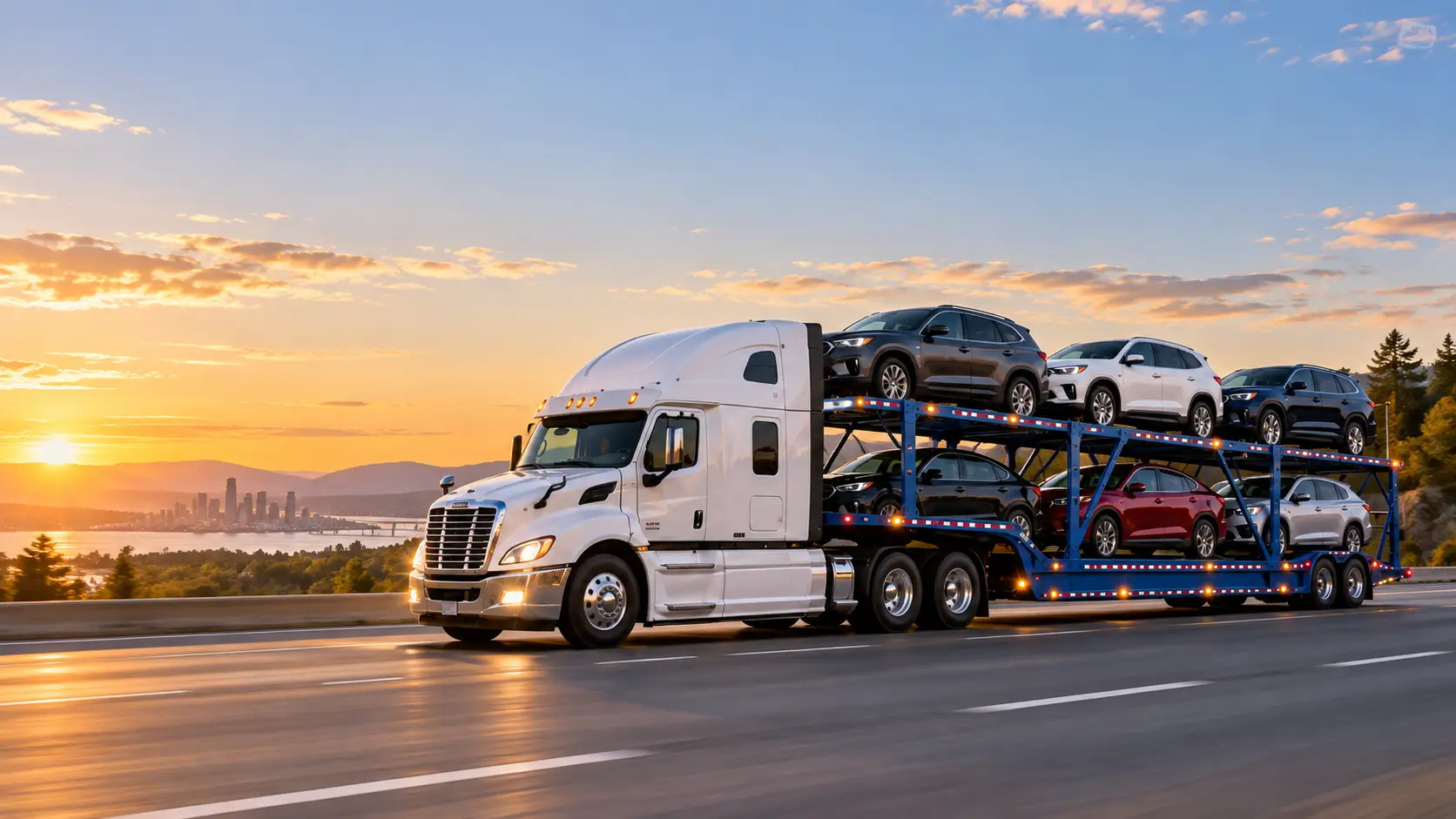
Auto transport is the professional transportation of a vehicle from one location to another on a specialized car carrier, instead of someone driving it there. You hand the keys to a driver at one end and take them back at the other. The car travels on a truck, not under its own power, so it arrives without the miles, the fuel, the hotels or the days behind the wheel.
The service goes by several names and they all mean the same thing: car shipping, vehicle shipping, auto shipping, vehicle transport, car transport and car hauling. If you have seen a truck on the interstate stacked with new cars headed for a dealership, that is the same equipment that would carry yours.
Rather talk it through? Call 888-709-9078.
Who uses auto transport, and why
Almost nobody ships a car for fun. There is usually a specific reason driving it yourself will not work, and it is nearly always one of these.
- Moving house. Job relocations, retirements and cross-country moves, especially when the household has more cars than drivers. Coast to coast is the most common version.
- Military PCS moves. Orders with a report date and no time to drive.
- College. August move-in and May graduation, the two busiest weeks of the student year.
- Snowbirds. South in October, north in April, the same cars both ways.
- Buying a car online. A purchase two states away that should arrive without 900 miles added to it.
- Auctions. Copart, IAA, Manheim and dealer sales, often on cars that do not run.
- Dealer transfers. Moving inventory between rooftops.
- Second homes. A car that lives at the vacation house half the year.
- Classic and collector cars. Vehicles that should not be driven 1,500 miles, or cannot be.
- Sending a car to family. A first car for a grandchild, or a car inherited three states away.
How does auto transport work?
Six steps from first quote to keys back in your hand. Most of it happens without you doing anything.
Get a quote
You give the pickup city or ZIP, the delivery city or ZIP, the year, make and model, whether the car runs, the first date it can go, and open or enclosed. Size and condition matter because they decide how much deck space and weight the car takes. A full-size pickup is not the same load as a compact sedan.
Book it
A deposit holds the booking and the balance is due at delivery. You give a pickup window rather than a single day: six days on standard service, three on expedited, both starting on the date you choose. The wider the window, the better the price and the faster a truck picks it up.
A carrier is assigned
Not every truck runs every route every day. Car shipping moves along the same corridors as the rest of American freight, so a run between two large metros fills faster than one into a rural area. Once a carrier is assigned you get the driver's details, and you can ask for the carrier's certificate of insurance at that point. Keep your phone on as the date approaches.
The car is inspected and loaded
You and the driver walk the car together and record its condition on the Bill of Lading. Existing scratches, dents and chips get written down before the car moves. Take your own photos too, from several angles, in good light. This ten minute step is the single most important thing you do, because that report settles anything that comes up later.
It travels
Your car rides with several others belonging to different customers, which is what makes the price work. The driver is bound by federal hours-of-service limits, weight rules, weather and traffic, so delivery is an estimated window rather than an appointment. It stays on that same truck the whole way, with no terminal stop and no transfer.
It is delivered
The driver calls ahead to arrange the drop. You walk the car again against the same Bill of Lading and your photos, then sign. Balance is due at this point. That is the whole process.
What does door-to-door auto transport actually mean?
Door-to-door means the carrier collects and delivers as close to your address as a full size truck can legally and safely get. For most addresses that is the curb outside your house. It does not mean the truck pulls into your driveway, and no honest company will promise that.
A car hauler is about 75 feet long, which is the length of six parked cars in a row. That is the number to picture when you think about your street. Places where it usually cannot reach you:
- Narrow residential streets and cul-de-sacs
- Low-hanging tree branches, which stop a truck sooner than narrow streets do
- Apartment complexes and their parking structures
- Gated communities without a code arranged in advance
- Low bridges and weight-restricted roads
- Dense downtown blocks with permit parking
When that happens the driver meets you at a wide parking lot, a shopping center or a nearby main road. It takes about ten minutes, costs nothing extra, and is still door-to-door service. Tell us your address at booking and the meeting point gets chosen in advance rather than solved on the day.
Open or enclosed auto transport?
This is the one real choice most people have to make, and for most cars it is not a close call.
Open auto transport
Your car rides on an open-air multi-car trailer, the same kind that delivers new vehicles to dealerships. It is the most common and most affordable option, with the widest availability, and it moves nine out of ten cars we ship.
Right for: sedans, SUVs, pickups, crossovers, daily drivers, used cars, family vehicles.
The car is exposed to weather and road conditions in transit, the same as it would be driving the route itself. For a car that lives outdoors anyway, that is not a meaningful risk.
Enclosed auto transport
The car travels inside a covered trailer, protected from weather, road debris and view. Plan on about 80 percent more than open. A $1,000 open move is roughly $1,800 enclosed. A hard-sided trailer holds two to six cars where an open one holds ten, so each car carries more of the cost.
Right for: classics, exotics, collector cars, restored vehicles, fresh paint, and anything too low to clear a standard ramp.
Most cars do not need it. If your car sleeps in a driveway, open transport is the right answer and the money is better kept.
There is a third option that is not a trailer type: expedited shipping narrows the pickup window from six days to three. It shortens the wait for a truck, not the drive itself, since federal hours-of-service rules set the floor on how fast anyone can cross the country. Compare open and enclosed side by side.
How much does auto transport cost?
Between $650 and $1,950 for a mid-size car on an open trailer, depending on the route. Atlanta to Orlando at 439 miles is $650. San Francisco to Miami at 3,045 miles is $1,950. Most moves people actually book land between $700 and $1,400.
There is no single price, because seven things move it:
- Where it is going. Bigger than most people expect. More on this below.
- Distance. Longer trips cost more in total.
- Vehicle size and weight. A full-size SUV takes more deck space than a compact.
- Running or not. A non-running car needs a winch, typically $200 or more above the same car running.
- Open or enclosed. About 80 percent more for enclosed.
- Season. May through August is the national peak. February through April is the cheapest.
- Your date flexibility. The biggest lever you actually control.
How long does auto transport take?
Roughly a day for every 400 to 500 miles once the car is loaded. These are transit estimates, not guarantees, and they start when the car goes on the truck rather than when you book.
| Distance | Time on the road | Example |
|---|---|---|
| Under 500 miles | 1 to 2 days | Atlanta to Orlando, 439 miles |
| 500 to 1,000 miles | 2 to 3 days | Chicago to Newark, 790 miles |
| 1,000 to 1,500 miles | 3 to 4 days | Houston to Miami, 1,200 miles |
| 1,500 to 2,000 miles | 4 to 6 days | Chicago to Las Vegas, 1,780 miles |
| 2,000 miles and up | 7 to 10 days | Seattle to Jacksonville, 2,992 miles |
Add the pickup window on the front. Standard service uses a six day window that starts on the date you request, expedited uses three. So a 1,200 mile move booked today is realistically one to two weeks from booking to your driveway, not four days. Weather, traffic, federal driving-hour rules and the driver's other stops all move the arrival day.
Auto transport terms, explained in one line each
Every word you are likely to hear between your first quote and your car arriving.
Bill of Lading
The inspection and transport document you and the driver sign at pickup and again at delivery. It records the car's condition before it moves and is the record everything rests on afterward. Often shortened to BOL.
Open transport
Shipping on an open-air multi-car trailer, the same kind that delivers new cars to dealerships. The most common and most affordable option.
Enclosed transport
Shipping inside a covered trailer, protected from weather and road debris. Costs about 80 percent more than open and carries fewer cars per load.
Door-to-door
Pickup and delivery as close to your address as a full size truck can legally and safely reach. Where a 75 foot truck cannot fit, the driver meets you at a nearby lot.
Pickup window
The range of days in which the driver will collect your car, starting on the date you request. Six days on standard service, three on expedited.
Carrier Cargo Insurance
The insurance that covers your vehicle while it is on the truck, from loading to delivery. Once a carrier is assigned you can ask for that carrier's certificate of insurance.
Inoperable or non-running
A vehicle that will not drive onto the trailer under its own power. It needs a truck with a winch, and whether it rolls, steers and brakes decides how much extra it costs.
Expedited transport
A shorter pickup window, three days instead of six. It speeds up how quickly a truck collects your car, not how fast the truck drives.
Dispatch
The moment your shipment is matched to a specific truck and driver. This is when you get the driver's details and when the deposit stops being refundable.
Hours of service
Federal rules limiting how long a driver can be behind the wheel each day. They set a floor on how fast any car can cross the country, no matter what anyone pays.
Deadhead
Miles a truck travels with an empty spot on the trailer. Somebody has to pay for those miles, which is why where your car is going affects the price as much as how far.
Terminal-to-terminal
A cheaper service where the car waits in a storage yard at each end rather than being collected from your address. We do not offer it, because it means more handling and time sitting in a lot.
What our customers say
Every review we publish sits on a public Google profile you can open and read for yourself. We do not write testimonials. Smart Auto Move is also BBB Accredited with an A+ rating, and you can open our FMCSA record and read it yourself.





Crystal Evans was very helpful.

Auto transport questions
The ten questions people search before shipping a car for the first time.
How much does it cost to ship a car?
How long does auto transport take?
What affects the price of auto transport?
Open or enclosed transport, and which should I pick?
Is my car insured during transport?
Can I leave personal items in the car?
Is door-to-door really door-to-door, and can a truck reach my street?
How do I prepare my car for shipping?
How far ahead should I book, and how does payment work?
How do I know an auto transport company is legitimate, and how do I avoid scams?
More questions are answered on the full auto transport FAQ.
Home › What Is Auto Transport?