
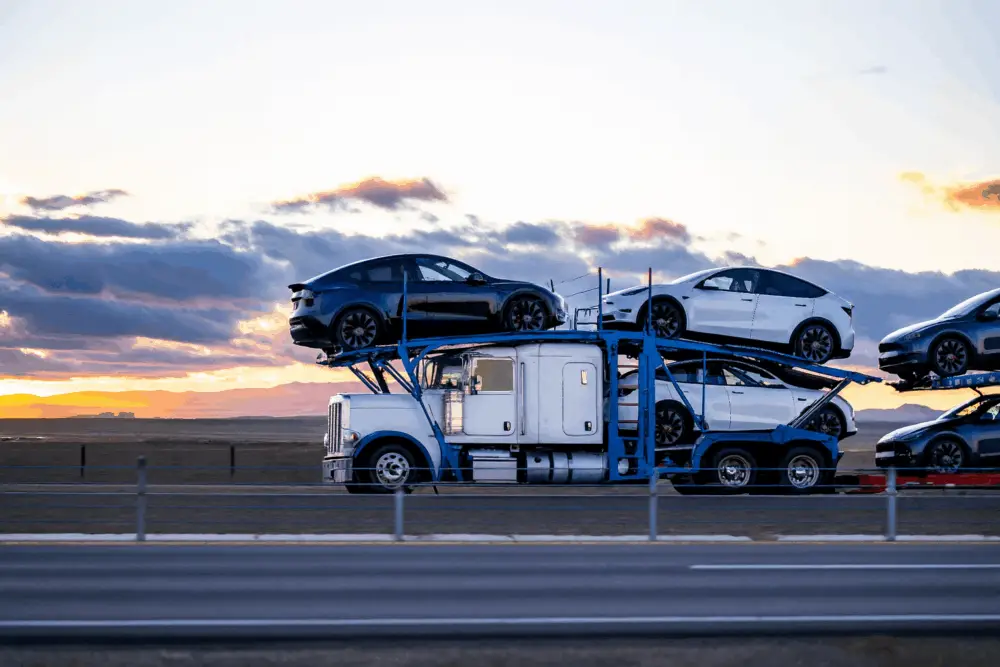
Los Angeles to Austin Car Shipping
Written by Richard Avery, President of Smart Auto Move · USDOT 2887232 · MC 969368
The cost to ship a car from Los Angeles to Austin is typically $1,150 to $1,350 on an open trailer, and takes between 4 to 5 days in transit time over 1,378 miles. Here is the part worth knowing: on most long routes the two directions cost noticeably different amounts. This corridor is one of the few where they come out level, and that is genuinely useful if there is any chance you will move back.
How much does Los Angeles to Austin car shipping cost?
Operable mid-size vehicle, open trailer, reviewed September 2026. The comparison rows are on the table because they are what this figure was built from.
| Route | Distance | Days on the road | Open transport |
|---|---|---|---|
| Los Angeles, CA to Austin, TX THIS ROUTE | 1,378 miles | 4 to 5 days | $1,150 to $1,350 |
| San Diego, CA to San Antonio, TX | 1,250 miles | 3 to 4 days | $1,150 |
| Los Angeles, CA to Houston, TX | 1,566 miles | 4 days | $1,300 |
| Houston, TX to Los Angeles, CA LEVEL BOTH WAYS | 1,566 miles | 4 days | $1,300 |
| Sacramento, CA to Austin, TX | 1,750 miles | 4 days | $1,300 |
We would rather show the working than present this as measured. Austin sits between San Antonio and Houston in distance from Southern California, and our completed loads on both of those bracket it: $1,150 at 1,250 miles, $1,300 at 1,566. Los Angeles to Austin at 1,378 lands between them. It is a derived range rather than one we have measured directly on this exact pair, and the calculator above will beat it for accuracy every time.
These are estimates, not fixed prices. Diesel is the biggest cost in moving a car and fuel prices move, so we review these figures as the market changes. Distances are driving miles and the days begin when the car goes on the trailer; your collection window comes first. Enclosed transport runs about 80 percent more than open. Oversized, modified and non-running vehicles each price on their own terms. See how the national bands work.
The California to Texas auto transport lane that costs the same both ways
Look at the two Houston rows. Same road, same distance, same price in both directions. That is rarer than it sounds and it is worth understanding, because most long routes are nothing like it.
On a lot of corridors one direction is the expensive one. A truck fills easily going one way and struggles coming back, and the harder half carries the difference. We publish that openly where it happens, because it changes how you should budget.
What to do with it. If you are moving to Austin and there is any chance of coming back, you can budget both legs at roughly the same figure instead of guessing at a premium. And if you are shipping two cars in opposite directions at once, which happens more than you would think on this corridor, neither one is the expensive half of the job.
Los Angeles to Austin Car Shipping Questions
What customers on this route actually ask, answered for Southern California and Central Texas rather than with national averages.
How much does it cost to ship a car from Los Angeles to Austin?
$1,150 to $1,350 for an operable mid-size vehicle on an open trailer. That range is derived rather than measured: our completed loads bracket Austin on either side, $1,150 at 1,250 miles into San Antonio and $1,300 at 1,566 miles into Houston, and this route sits at 1,378 miles between them. We show that working on the page above instead of presenting the figure as something we recorded on this exact pair.
Why is the price the same in both directions on this route?
Because both ends are busy. A carrier prices a leg on how easily he can fill the trip that follows it, and Southern California is the strongest inbound market on the West Coast while Texas loads up readily going the other way. Neither half of the round trip runs empty, so neither half has to pay for the other. Our Houston rows show it plainly: $1,300 westbound, $1,300 eastbound, same road.
Is that unusual?
It is. On most corridors this long one direction costs a few hundred dollars more, and we say so on the pages where that is true. Las Vegas to Philadelphia is a good example of the lopsided kind. California to Texas is one of the few long lanes where you can plan a move out and a possible move back at roughly the same number.
How long does Los Angeles to Austin auto transport take?
Four to five days on the road once your car is loaded. It is 1,378 miles and very nearly all of it is I-10, which is why the band is as tight as it is. Your collection window comes before those days start: six days on standard service, three on expedited.
Why is the transit estimate a range rather than a date?
Your car shares the trailer with eight or nine others, and the driver is collecting and delivering along the way. The order those stops fall in decides whether you are at the front of the run or near the end. The driver calls the evening before delivery with a real time, which is more use to you than a date promised a week out.
What does the pickup window mean?
A spread of dates, not an appointment. Six days standard and three expedited, counted from the date you choose. That spread is what lets a dispatcher fit your car into a run already forming rather than sending a truck out for you alone, and it is the reason the price looks the way it does.
Is expedited worth paying for on this lane?
Sometimes. Expedited narrows the collection window from six days to three; it does not make the truck drive faster. If you have a lease ending or a start date in Austin that will not move, it buys certainty. If your dates are soft, standard puts the same car on the same road for less.
What route does my car take to Texas?
East out of the Los Angeles basin, across the desert through Phoenix and Tucson, then Las Cruces, El Paso and the long West Texas run to the Hill Country. I-10 is the southernmost crossing in the country, which is why this lane keeps its schedule through months when the northern routes are held up by weather.
Does the season affect Los Angeles to Austin vehicle shipping?
Less than almost any long route we run, because I-10 stays low and dry. The thing that does move on this corridor is demand. Summer is the busiest stretch for California to Texas relocations and prices firm up with it. Booking ten days ahead in July is worth more than booking ten days ahead in February.
Do Austin events change anything?
They can. Central Texas fills up hard around the big spring and fall festival weeks, and hotel and traffic pressure downtown makes delivery slots tighter rather than the price higher. If your delivery lands in one of those windows, tell us when you book and we will plan the drop around it.
Can a truck reach my address in Los Angeles?
Usually. Where it cannot, the reason is almost always overhead: a car carrier is around 75 feet long and 13 feet tall, and hillside streets, low branches and tight apartment garages defeat it. When that is the case we agree a nearby lot in advance. Our Los Angeles staff know which blocks are a problem before the driver gets there.
Can the driver deliver to my street in Austin?
Most Austin addresses are fine. Central neighborhoods with narrow streets and mature tree cover are the ones worth checking, and downtown high-rise garages are generally a no on clearance alone. We sort the meeting point out when the load is booked rather than leaving the driver to improvise.
Do you have an office in Austin?
Not a walk-in one. Los Angeles is a staffed office of ours; Texas we cover as a service area, with our people handling the Austin end by phone and the carriers doing the driving. We would rather be straight about that than imply a storefront you could visit. Registered business address: 4208 Six Forks Rd Ste 1000, Raleigh, NC 27609.
Should I ship open or enclosed?
Open for nearly everything. It is what the range on this page is priced for and it is how the large majority of cars move. Enclosed runs about 80 percent more and earns that on a classic, a low-clearance car, something freshly restored or a vehicle whose value makes the difference immaterial to you.
Is enclosed easy to get on this route?
Yes, more easily than on most. California to Texas carries a steady flow of collector and specialty vehicles, so enclosed equipment runs the corridor regularly. On thinner lanes an enclosed booking can wait a week for the right trailer. Here it usually does not.
Can you ship an electric vehicle?
Yes, and plenty on this corridor are. Charge it to somewhere around half, tell us the model so the driver plans the loading order for the extra weight, and turn off anything that wakes the car up while it sits. Sentry modes and similar features will flatten a battery over four days on a trailer.
What happens if the car does not run?
It can still go, on a truck with a winch. We do not charge a flat fee for it; budget from $200 upward depending on how much the car will cooperate. What matters most is that it rolls, steers and brakes. Tell us honestly what it will and will not do, because the wrong truck showing up costs everyone a day.
How should I prepare the car before pickup?
A quarter tank of fuel, no more. Wash it so the condition report at pickup means something. Fold the mirrors, retract the antenna, take the toll tag off the windshield, note anything already chipped or scraped. Have a spare key ready if you can, and make sure whoever hands the car over has our number in their phone.
Can I leave things in the car?
A small amount in the trunk, under about 100 pounds, and nothing you would miss. Carrier Cargo Insurance covers the vehicle, not household contents. Weight matters more than you would think when nine cars are on a trailer, and loose items in the cabin become a problem over 1,378 miles.
Who covers the car while it is in transit?
The carrier moving it. Every carrier we dispatch to holds Carrier Cargo Insurance, and we confirm the certificate is live before your car is loaded, not after. Ask us for a copy any time and we will send it. Your own policy usually still applies as well, so it is worth a call to your insurer.
Does my car get moved between trucks along the way?
No. One driver, one trailer, Los Angeles to Austin. Nothing is transferred at a yard in Phoenix or El Paso. The person who loads your car is the person who unloads it, which is the single biggest reason cars arrive in the condition they left in.
Can someone else receive the car in Austin?
Yes. Give us their name and number when you book. They need to be an adult who can walk around the car with the driver and sign the delivery report. That last part matters, because the report signed at delivery is what any later conversation rests on.
Do I have to pay before the car moves?
No. There is nothing to pay to get a price and nothing to pay to have the load booked. Payment terms are set out before you commit, and if you have a question about them a person will answer it. We do not make outbound sales calls, so nobody will be chasing you for a decision.
The road your car takes on this vehicle shipping run
1,378 miles, and almost all of it on one road. That is part of why the transit band is as tight as it is.
East on I-10, the southern car shipping route
Out through the Inland Empire and across the desert to Phoenix and Tucson, then Las Cruces and El Paso. I-10 is the southernmost route across the country, which is why this lane keeps its schedule in months when the northern ones are dealing with weather.
The long West Texas auto transport stretch
El Paso to the Hill Country is the emptiest part of the trip and the fastest. Little to slow a truck down and few places to stop, so drivers generally make good time across it.
Into Austin on the last vehicle shipping leg
Most drivers leave I-10 around Junction and come in on US-290, or carry on to San Antonio and turn north on I-35. Which one depends on the rest of the load, and it does not change your price.
There is no mountain pass and no snow belt on this route. The one thing that can add a day is the pickup end rather than the road: Los Angeles is a large, dense metro and getting a full-size carrier to a particular street is occasionally the slowest part of the whole job. A wider collection window handles it.
Where Los Angeles car shipping collects your vehicle
We have a staffed office in Los Angeles, which on this route means the people arranging your carrier are in the same time zone and the same traffic as your driver.
Most Los Angeles auto transport loads at the address
The Valley, the South Bay, Orange County and the Inland Empire are all straightforward. Wide roads, driveways and freeway access close by. Most of it loads at the curb with no arrangement needed.
The hillside and coastal vehicle shipping streets
Above Hollywood and Silver Lake the roads are narrow and steep, and older blocks around Santa Monica and Venice are tight with parking on both sides. Buildings with underground parking are a firm no for a trailer. We meet you a short distance away, at no extra charge.
Our Los Angeles car shipping office
Having people here is the difference between a question answered the same afternoon and one that waits for tomorrow. Our Los Angeles car shipping page has the local detail. Cars are collected from your address; the office is not somewhere your vehicle goes.
Where Austin vehicle shipping delivers your car
Central Texas is mostly easy for a loaded carrier, with two things worth naming when you book.
Austin car shipping across the metro
Round Rock, Cedar Park, Leander, Pflugerville, Georgetown, Buda and Kyle were built with room and are entirely routine. Driveways, turning space and quick highway access. If you have a choice of delivery address, a suburban one is usually quicker.
Central Austin auto transport streets
Downtown high-rises, South Congress, Hyde Park and the older streets near campus are the tight ones, with narrow lanes, parking both sides and garages a 75-foot trailer cannot enter. A nearby lot settles it, agreed before the day.
Timing your Austin vehicle shipping delivery
I-35 through the middle of Austin is slow at peak hours and drivers plan around it, usually aiming for mid-morning or the evening. Keep your phone to hand on delivery day and the two of you can work the timing around the traffic.
Austin is a served market for us rather than a staffed office, so there is no counter to visit at the Texas end and there does not need to be. Your car is collected from your address and delivered to the other one, and the national line on 888-709-9078 is staffed for anything that comes up. Our Austin car shipping page covers the city on its own.
How long does Los Angeles to Austin auto transport take?
Two stages. The driving is the predictable one, and on a route this straight it behaves well.
Your Los Angeles car shipping window comes first
Six days on standard, three on expedited, counted forward from the date you name. Southern California is one of the busiest origins in the country, so pickups here usually land in the first half of that band.
Then 1,378 miles of I-10 auto transport road
Four to five days. Federal hours-of-service rules cap how far a driver can legally travel in a day, and he is loading and unloading eight to ten other vehicles at stops along the way. That is what sets the floor.
Then the Austin vehicle shipping delivery call
He calls ahead once he is close and the two of you agree the place and the hour. Put the name and cell number of whoever will meet him with the keys on the booking.
Two weeks of notice is comfortable on this corridor. Give three around the start and end of the university year in Austin, and through the late-summer moving peak when California to Texas traffic is at its heaviest. Winter is genuinely easy here, because the southern route does not close and demand is lower.
Open, enclosed or expedited Los Angeles to Austin vehicle shipping
Three ways to move the same car, and on this corridor all three are readily available.
Open Los Angeles to Austin car shipping
Every figure here is built on it. Nine or ten vehicles share an uncovered double-deck trailer, the same rig that delivers new stock to dealerships. It also schedules fastest, because open trailers make up most of what runs I-10.
Enclosed Los Angeles to Austin auto transport
Plan on about 80 percent more than open. A hard-sided trailer takes two to six cars against ten, so fewer vehicles share the cost of the run. Southern California books more enclosed than almost any market in the country, so capacity out of here is better than you might expect.
Expedited Los Angeles to Austin vehicle shipping
Halves the collection window, six days to three. It does not shorten the drive, because driving hours are federal. On a four to five day road the window is a meaningful share of your timeline, so this is worth asking about when a start date is fixed.
Is your car insured on a Los Angeles to Austin car shipping order?
Yes, the whole way. Whose policy it actually is catches people out, so here it is plainly.
What covers your auto transport order
Carrier Cargo Insurance, held by the trucking company moving your vehicle rather than by us. It is in force across all 1,378 miles, from the California driveway to the Texas one. The certificate reaches our file as soon as a carrier accepts the order and we will send it over whenever you ask.
One vehicle shipping driver, both driveways
The driver who loads in Los Angeles is the driver who unloads in Austin. Nothing is set down in Phoenix or El Paso along the way and no second company is involved at any stage. A change of hands is where damage disputes almost always begin, and this trip has none.
All of it is checkable in a minute. SAFER is the FMCSA's free public lookup: enter a USDOT number and it returns that carrier's operating authority and the insurance filed against it. Ours is USDOT 2887232, MC 969368.
What Los Angeles to Austin car shipping customers say
Reviews from across our offices. You can also read the customer reviews on our BBB profile, where we hold an A+ rating and have been accredited since 2016.




Crystal Evans was very helpful.

More California and Texas auto transport pages
The pages at either end of this route, the other California to Texas lanes, and the guides worth a look before you book.