
Seattle to Los Angeles Car Shipping Cost
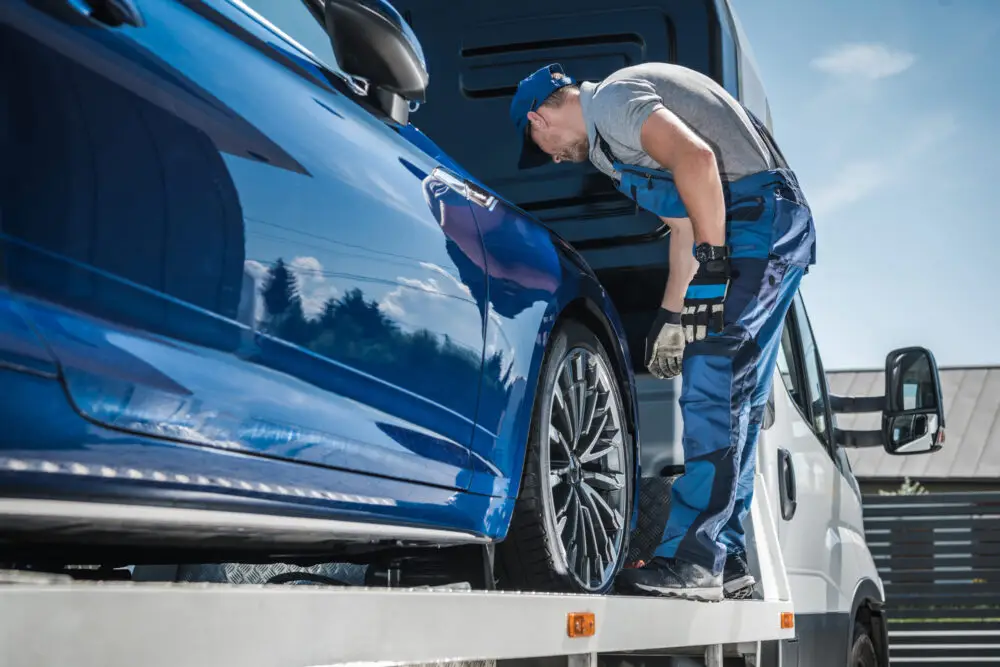
Seattle to Los Angeles Car Shipping and Auto Transport
Written by Richard Avery, President of Smart Auto Move · USDOT 2887232 · MC 969368
The cost to ship a car from Seattle to Los Angeles is typically $900 to $1,200 on an open trailer, and takes between 3 to 4 days in transit time. That is about 1,140 miles, and the same range holds in the return direction. This is the one lane we publish with a staffed Smart Auto Move office at each end, and the next section explains what that actually buys you.
Smart Auto Move provides nationwide car shipping throughout the lower 48 states, backed by four strategically located staffed offices, six additional service areas, and a trusted carrier network of more than 16,000 transport professionals nationwide. Our extensive network allows us to serve customers across the continental U.S. with reliable vehicle transport from coast to coast.
Service is not currently available in Alaska, Hawaii, or Puerto Rico.
How much does Seattle to Los Angeles car shipping cost?
Every row below is a running mid-size car on an open trailer, reviewed September 2026. Almost the whole Puget Sound prices in one range, because everything from Olympia to Everett sits on the same road.
| Route | Also covers | Distance | Days on the road | Open transport |
|---|---|---|---|---|
| Seattle to Los Angeles THE LANE | Long Beach, Glendale, Pasadena, Burbank, Santa Monica, Torrance | About 1,140 miles | 3 to 4 days | $900 to $1,200 |
| Lakewood or JBLM to Los Angeles OFFICE TO OFFICE | Joint Base Lewis-McChord, Puyallup, DuPont | About 1,105 miles | 3 to 4 days | $900 to $1,200 |
| Tacoma to Los Angeles | Federal Way, Auburn, Kent, Renton | About 1,110 miles | 3 to 4 days | $900 to $1,200 |
| Olympia to Los Angeles SHORTEST | Lacey, Tumwater, Centralia, Chehalis | About 1,090 miles | 3 to 4 days | $900 to $1,200 |
| Bellevue or Everett to Los Angeles | Redmond, Kirkland, Lynnwood, Marysville | About 1,160 miles | 3 to 4 days | $900 to $1,200 |
| Vancouver WA to Los Angeles BEST VALUE | Portland, Salem, Eugene, Longview | About 965 miles | 3 to 4 days | $875 to $1,175 |
| Bellingham to Los Angeles | Mount Vernon, Burlington, Anacortes | About 1,230 miles | 3 to 5 days | $950 to $1,250 |
| Seattle to Orange County or the Inland Empire | Anaheim, Irvine, Santa Ana, Riverside, San Bernardino | About 1,175 miles | 3 to 4 days | $900 to $1,200 |
| Seattle to San Diego | Chula Vista, Oceanside, Carlsbad, Escondido | About 1,255 miles | 4 to 5 days | $1,000 to $1,300 |
| Seattle to the Bay Area | San Francisco, Oakland, San Jose, Berkeley | About 870 miles | 3 to 4 days | $1,000 to $1,150 |
| Seattle or Tacoma to Sacramento | Roseville, Folsom, Elk Grove, Stockton | 750 to 800 miles | 2 to 3 days | $900 to $1,150 |
| Spokane or the Tri-Cities to Los Angeles | Spokane Valley, Yakima, Kennewick, Richland | About 1,215 miles | 3 to 4 days | $1,075 to $1,300 |
| Los Angeles back to Seattle THE RETURN LEG | The same road, the other way, at the same price | About 1,140 miles | 3 to 4 days | $900 to $1,200 |
| Sedan or small crossover LOWER IN THE RANGE | Civic, Corolla, Accord, Camry, CR-V | About 1,140 miles | 3 to 4 days | Nearer $900 |
| Mid-size SUV or crossover | RAV4, Equinox, Highlander, Pilot | About 1,140 miles | 3 to 4 days | About $1,050 |
| Full-size pickup or three-row SUV HIGHER IN THE RANGE | F-150, Silverado, Tahoe, Suburban | About 1,140 miles | 3 to 4 days | Nearer $1,200 |
| JBLM to Naval Base Ventura County | Point Mugu, Port Hueneme, Oxnard, Camarillo | About 1,075 miles | 3 to 4 days | $900 to $1,200 |
| JBLM to Los Angeles AFB or Edwards AFB | El Segundo, Lancaster, Palmdale, Seal Beach | 1,050 to 1,120 miles | 3 to 4 days | $900 to $1,200 |
| Any route of 500 to 1,500 miles NATIONAL BAND | The whole West Coast corridor | 500 to 1,500 miles | 2 to 5 days | $900 to $1,600 |
Read these as estimates rather than fixed prices. Fuel is the single largest cost in hauling a car and it tracks the market, so the rows get reviewed against it. Road days start when your pickup window closes. Enclosed adds roughly 80 percent. A car that will not start needs a winch truck, which adds $200 or more. See how our national bands work.
Where these figures come from. The Seattle, Lakewood, Tacoma, Vancouver, Bellingham, San Diego, Bay Area and Sacramento rows are already published on our Washington to California page and our Seattle to San Diego page. The Spokane row comes from our Spokane page. Olympia, Bellevue, Everett, the Orange County row and the two base rows are stepped along that same curve by distance. Nothing here contradicts a figure we publish elsewhere.
Notice that this lane sits right at the floor of its national band. The 500 to 1,500 mile band runs $900 to $1,600, and Seattle to Los Angeles starts at $900 over 1,140 miles. That is what one road and two dense markets are worth.
The only lane we publish with a staffed office at both ends
We have four staffed offices in the country. Two of them sit on this one road.
Lakewood, at 5607 Boston Ave SW on 253-200-5645, about 40 miles south of Seattle and a few minutes from Joint Base Lewis-McChord. The dispatchers who book your carrier work there, on Pacific time.
Los Angeles, at 5111 Harold Way Suite 301 on 213-766-0064. The team handling your delivery works there, also on Pacific time. Same time zone at both ends, which makes coordination genuinely easier.
That matters in a practical way rather than a promotional one. On most long lanes, one end is handled by our team and the other is handled by the carrier alone. Here both ends are ours. If something needs sorting mid-route, the people at each end of the phone call work for the same company.
Neither office is a terminal, and that is deliberate. Your car goes from your address straight onto the carrier and stays covered under Carrier Cargo Insurance for the whole trip. No holding lot in the middle.
What to do with this. Call whichever end you are closer to. Lakewood on 253-200-5645 if you are in Washington, Los Angeles on 213-766-0064 if you are in California, or the national line on 888-709-9078 either way. All three reach a team that books this corridor every week.
Seattle to Los Angeles Car Shipping Questions
The questions customers on this lane really ask, answered with this route's own numbers.
How much does it cost to ship a car from Seattle to Los Angeles?
The cost to ship a car from Seattle to Los Angeles is typically $900 to $1,200 on an open trailer, and takes between 3 to 4 days in transit time. That is about 1,140 miles. Lakewood, Tacoma, Olympia, Bellevue and Everett all price in the same range, and so does the return direction.
Is this one of your better-priced long lanes?
It is, and the reason is the road. Interstate 5 is the busiest freight corridor on the West Coast and it runs the whole way. A car heading south from Seattle fills a space on a trip that was already happening, so the rate sits right at the bottom of our 500 to 1,500 mile national band of $900 to $1,600 rather than in the middle of it.
Why is there a staffed office at both ends?
Because two of our four staffed offices sit on this one road. Lakewood, Washington is at 5607 Boston Ave SW on 253-200-5645, about 40 miles south of Seattle. Los Angeles is at 5111 Harold Way Suite 301 on 213-766-0064. So the team booking your carrier and the team handling your delivery both work for Smart Auto Move. No other lane we publish has that at both ends.
Does it cost the same in the other direction?
Yes, and that is unusual. Los Angeles back to Seattle is the same $900 to $1,200 over the same 1,140 miles. Most long lanes cost more in one direction than the other, because one end has more freight than the other. Here both ends are dense West Coast markets on the same interstate, so the rate holds level.
What does a truck or an SUV cost on this lane?
The range covers it. A sedan or small crossover sits nearer $900. A mid-size SUV or crossover lands around the middle, about $1,050. A full-size pickup or a three-row SUV sits nearer $1,200. Oversized lifted trucks and dual-rear-wheel pickups get their own quote.
What actually decides where in the range I land?
Three things, mostly. What the vehicle is, since deck space and weight move you up the range. How flexible your pickup dates are, because a wider window lets us catch a trailer that is already heading south. And the season, since summer is the busiest stretch on the West Coast. Your quote is one price for the whole trip, worked out for its distance and the route it takes.
Are the prices on this page fixed?
They are careful estimates, reviewed against the market. Fuel is the largest single cost in hauling a car, and it moves. So we review these rows against it rather than letting them go stale. Once you accept a quote, the Smart Price Promise holds it. That holds as long as the vehicle, the route, the condition and the shipping details stay the same.
What is included in the price?
Door to door pickup and delivery, loading and unloading, the road miles, and Carrier Cargo Insurance for the whole trip. There is no terminal fee. There is no fuel surcharge added later. Enclosed transport and a vehicle that will not start are priced up front, not at the curb.
How much more is enclosed transport on this lane?
Enclosed costs about 80 percent more than open. It is the right call for a classic, a collector car, an exotic, a fresh restoration or anything low to the ground. On a run down Interstate 5 the weather is mild, so the usual reason people choose enclosed here is the value of the car rather than the conditions.
What does it cost to ship a car that will not start?
A vehicle that will not start needs a winch truck. That adds $200 or more, depending on what the driver has to do to get it aboard. There is no flat fee. A car that rolls and steers is a very different job from one that does neither. Tell us the true condition when you request a quote and the figure is in your price from the start.
How can I get the bottom of the range?
Give us the widest pickup window you can live with. That is the single best lever you have on this lane. A driver filling the last space on a trailer will often take a nearby car rather than travel further for a better paying one, and Interstate 5 carries plenty of those. Also ask about the military, student and senior discounts before your price is confirmed.
Do you offer discounts on this route?
Yes. Military, student and senior discounts all apply, in either direction. Military is the one most used here, because Joint Base Lewis-McChord sits at the Washington end and Southern California has bases at the other. Ask before your price is confirmed and it is built into the figure you agree to.
How does Seattle to Los Angeles compare with Seattle to San Diego?
San Diego is about 115 miles further and costs about $100 more, at $1,000 to $1,300 over about 1,255 miles. It also takes 4 to 5 days rather than 3 to 4. If your delivery address could be either, Los Angeles is the better-priced of the two.
How does it compare with Seattle to the Bay Area?
The Bay Area is closer at about 870 miles but costs about the same, at $1,000 to $1,150 in 3 to 4 days. That looks odd until you know why. Los Angeles is a far denser delivery market, so the longer run into it prices as well as the shorter run into Northern California.
How long does Seattle to Los Angeles car shipping take?
Between 3 and 4 days on the road. Those are road days and they start when your car is loaded, not when you book. San Diego adds a day at 4 to 5. Sacramento and the Bay Area are 2 to 3 and 3 to 4.
Why 3 to 4 days for 1,140 miles?
Federal rules cap how long a driver may be behind the wheel each day. There are also eight or nine other cars on the trailer, each with its own pickup and delivery point, and the route is built around all of them. A car could be driven down Interstate 5 in two long days. A loaded carrier working legally takes three or four.
When does the transit clock start?
When your car is loaded, not when you book. The pickup window comes first and the road days follow it. That is why the two numbers are quoted separately. On this lane the pickup window is where most of the uncertainty sits, and it is also where flexibility pays.
How soon can a carrier pick up in Seattle?
The standard pickup window is 6 days. Expedited narrows it to 3 days, which is 72 hours. Interstate 5 is busy in both directions all year, so we are often able to place a car near the early end of that window.
Can I get a faster pickup?
Yes. Expedited scheduling narrows the pickup window from 6 days to 3, which is 72 hours. The road days stay the same. Federal driving-hour limits apply to every driver on the interstate, and no service moves them. What you are buying is a faster start, not a faster truck.
Does weather affect this lane?
Rarely, and that is one of its strengths. Interstate 5 stays open through almost any winter along this stretch, and there is no mountain pass on the scale of Donner or the Rockies to cross. The Siskiyou Summit at the Oregon and California line is the one place that can pick up snow, and it is usually a delay of hours rather than days.
What is the busiest time of year?
May through August, driven by family moves, military orders and college dates. Capacity tightens and the best pickup dates go first. Spring and fall give you the widest choice, so if your dates are flexible aim for March to April or late September to November.
What route does my car take?
Interstate 5, the whole way. South out of Seattle through Tacoma, Olympia and Vancouver, then Portland, Salem, Eugene, over the Siskiyou Summit into California, down through Redding, Sacramento and the Central Valley to the Grapevine and into Los Angeles.
Is it really one road the whole way?
It is, and that matters more than it sounds. Interstate 5 runs 1,381 miles from the Mexican border in San Diego to the Canadian border in Blaine, Washington, and it is the only continuous interstate that touches both borders. Seattle and Los Angeles both sit on it. Fewer road changes means fewer places for a schedule to slip, which is why we publish a tight 3 to 4 day range on a 1,140-mile run.
Does the Grapevine cause problems?
Very rarely, and drivers on this corridor know it well. The Tejon Pass, which everyone calls the Grapevine, is the climb just north of Los Angeles. It closes occasionally in winter for a few hours. Carriers running Interstate 5 weekly plan around it as a matter of routine.
Do you pick up outside Seattle itself?
Yes, all along the corridor, and most of it prices the same. Tacoma, Lakewood, Olympia, Federal Way, Auburn, Kent, Renton, Bellevue, Redmond, Kirkland and Everett all sit in the $900 to $1,200 range. Vancouver, Washington is a little cheaper because it is 175 miles further south to start with.
What about Spokane and eastern Washington?
Spokane to Los Angeles is about 1,215 miles at $1,075 to $1,300 in 3 to 4 days, which is a little above the Interstate 5 rows. Spokane is off the corridor, so the driver has a leg to make before he is on the main line. The Tri-Cities and Yakima price in the same area.
Where in Los Angeles do you deliver?
Anywhere in the basin and beyond it. Long Beach, Glendale, Pasadena, Burbank, Santa Monica, Torrance and the San Fernando Valley all sit in the Los Angeles row. Orange County and the Inland Empire, which means Anaheim, Irvine, Santa Ana, Riverside and San Bernardino, are about 1,175 miles and price the same.
Do you handle military moves on this lane?
Yes, and it is one of the busiest parts of our work here. Joint Base Lewis-McChord sits right next to our Lakewood office, and Naval Base Kitsap, Naval Station Everett and NAS Whidbey Island are all within reach. At the California end there is Naval Base Ventura County, Los Angeles Air Force Base, Edwards Air Force Base and Naval Weapons Station Seal Beach.
What does a PCS shipment cost from JBLM?
The same as the Lakewood row, $900 to $1,200 over about 1,105 miles in 3 to 4 days. JBLM is a few minutes from our Lakewood office, so it is the shortest starting point on the Washington end of this lane. The military discount applies in either direction.
When should I book a PCS move on this route?
As soon as you have orders in hand. May through August is the busiest stretch across the whole West Coast, so the best pickup dates go first. Four to six weeks ahead makes a real difference to both your date and your price.
Can you ship my car while I am deployed?
Yes. Any adult you nominate can hand the car over or take delivery, as long as we have their name and number at booking. Spouses, a family member or a neighbor all work. Plenty of our shipments on this lane are arranged by someone who is not standing next to the car.
Can you ship two cars for a PCS move?
Yes, and it is usually the better deal. Both cars go on the same carrier and arrive together, which is what most families want on a move. Tell us both vehicles when you request the quote and the price covers the pair.
Is my vehicle insured during transport?
Yes. Your car travels under the assigned carrier's Carrier Cargo Insurance. Cover starts the moment it is loaded and ends when it is handed back to you. It goes from your address straight onto the trailer. No terminal, no holding lot, no gap in between. You can check any carrier's active authority and insurance on the FMCSA SAFER system before your car is loaded, and we will tell you who the carrier is.
Is my car stored anywhere along the way?
No. It stays on the same carrier from pickup to delivery and is covered the whole way. There is no terminal and no holding lot in the middle. One trailer, one driver, and a handover at each end.
Is door to door available on this lane?
Yes, at both ends, wherever a full-size carrier can work safely and legally. A carrier is about 75 feet long. Where a street is too narrow, a gate too tight or a branch too low, we agree a meet-point a few minutes away. It costs nothing extra, and the paperwork and inspection are exactly the same.
What are the tricky addresses at each end?
In Seattle it is the hill streets on Queen Anne and Capitol Hill, and the narrow blocks in Ballard and Fremont. In Los Angeles it is the canyon roads, the older hillside streets and some of the tighter parts of Hollywood and Silver Lake. We know both cities well, so the meet-point is usually settled at booking.
Do I have to be there for pickup and delivery?
Someone does, at both ends. The driver walks the car with you and records its condition on the Bill of Lading, and you both sign. It takes a few minutes, and it is what protects you. Better to be there than to leave the keys.
Can someone else release or receive the car?
Yes. Any adult you nominate can hand the car over or take delivery, as long as we have their name and number at booking. On a West Coast move that is very common, because people often fly ahead of the car.
Can I leave personal items in the car?
Usually yes, within reason. Keep it light and keep it low. Use the trunk or the footwells rather than the seats or the parcel shelf, so the driver can see out and the weight stays sensible. Take anything valuable or irreplaceable with you. Tell us at booking if you are packing more than a suitcase or two, and the assigned carrier will be expecting it.
Should I take my Good To Go pass off?
Yes. A Washington Good To Go pass will read on the tolled stretches around Seattle, and a California FasTrak will read at the far end. Take the transponder off the windshield, or seal it in its shielded bag, before the driver arrives.
How much fuel should be in the tank?
About a quarter of a tank is ideal. That is enough to load, unload and drive away at the far end. It also avoids weight the trailer does not need. A full tank on nine cars adds up fast.
Should I wash the car before pickup?
It helps. A clean car makes the condition report at pickup much easier to read, which makes the inspection at delivery easier too. Photograph it in daylight from all four corners once it is clean, and you have your own record alongside the Bill of Lading.
What is a Bill of Lading?
It is the condition report for your car, and the most useful piece of paper in the whole trip. The driver records the car's condition at pickup and you both sign. At delivery you compare the car against it before signing again. Keep your copy until the delivery is complete and you are satisfied.
What happens if something is damaged in transit?
Note it on the Bill of Lading at delivery, before you sign, and photograph it. That is the record that matters. Then call us. We handle the claim with the carrier from there rather than leaving it with you. It is rare, and it is why the two inspections are worth the few minutes they take.
Do you ship SUVs, pickups and vans?
Yes, every week on this lane. A sedan sits nearer $900, a mid-size SUV around $1,050, and a full-size pickup or three-row SUV nearer $1,200. Minivans and work vans ship on open trailers too. Oversized lifted trucks and dual-rear-wheel pickups get their own quote.
Can you ship a lowered or modified car?
Yes, and tell us about it when you book. Low ground clearance, a front splitter, a wide body or oversized wheels all change which trailer and ramps the job needs. Given the details up front, we assign a carrier equipped for it. For anything very low that is usually enclosed transport with a lift gate.
Can you ship an electric vehicle?
Yes. An EV ships like any other car and the battery does not need charging on the way. Tell us the model when you book, because some EVs are heavier than a comparable gas car and that affects where the driver places it on the deck. Leave it at a moderate state of charge rather than full.
Do you ship classic and collector cars to Los Angeles?
Yes, and enclosed transport is what we recommend for one. Southern California has one of the best collector markets in the country, so this is a busy direction for us. Enclosed costs about 80 percent above the open price and keeps the car away from weather and road debris for the entire trip.
Can you ship a car I bought online?
Yes, and it is one of the most common jobs we do in both directions on this lane. We collect from a dealer, an auction, a private seller or a storage lot and deliver to your address. Have the seller ready with the keys and the paperwork, and tell us if the car has been sitting long enough that it may not start.
Do you handle dealer and auction shipments?
Yes, on their own terms and timelines. We move vehicles for dealers at both ends of this corridor and collect from auction lots in Washington, Oregon and California. Tell us the lot, the gate hours and the release paperwork at booking and the pickup goes smoothly.
How long do I have to register a car in California?
Twenty days. California gives a new resident 20 days to register a vehicle brought into the state, which is one of the shorter windows in the country. Check the current requirements and fees at the California DMV before your car arrives so the paperwork is ready and you are not against the clock.
Will my Washington car pass in California?
Usually, and it is worth checking one thing before you ship. California has its own emissions standards, and a car originally built to federal rather than California specification can need extra steps. Most cars from the last twenty years are fine. Look at the emissions label under the hood, and if it mentions California you have nothing to think about.
Does California require a smog check?
In most of the state, yes, and it applies when you register a car brought in from elsewhere. It is a straightforward test at a licensed station. Book it soon after your car arrives so the registration is not held up waiting for it.
What about going the other way, into Washington?
Washington gives you 30 days to register, and there is no emissions testing program in the state any more. It ended at the start of 2020. So a car shipped north into Washington has a simpler arrival than one shipped south into California.
Do you really have offices at both ends?
Yes, and they are two of our four staffed offices. Lakewood, Washington at 5607 Boston Ave SW on 253-200-5645, and Los Angeles at 5111 Harold Way Suite 301 on 213-766-0064. The other two are Chicago and Kissimmee in Florida. On this lane, both ends of your shipment are handled by people who work for us.
Can I visit either office?
Visits are by appointment, and booking happens online or over the phone rather than at a counter. Both are logistics offices, where dispatchers schedule carriers and update customers, so a call gets you further than a drive.
Is my car stored at either office?
No, and that is deliberate. Neither is a terminal. Your car goes from your address straight onto the carrier and stays covered under Carrier Cargo Insurance for the whole trip, with no holding lot in the middle. One less place for a car to sit, and one less handover to go wrong.
Who actually moves my car?
Smart Auto Move is a car shipping company. We arrange and manage your transport end to end. The job goes to a vetted carrier from a network of more than 16,000 transport professionals nationwide. We stay with it until the car is delivered. You will know which carrier has your car, and you can check their authority and insurance yourself before it is loaded.
How do I check that you are properly authorized?
Look us up on the FMCSA SAFER system under USDOT 2887232 and MC 969368. Both numbers are on every page of this site for exactly that reason. We are also BBB A plus accredited. We will give you the assigned carrier's USDOT number so you can check them too.
Will you call or text me after I request a quote?
No. We do not call or text quote-form leads. Your quote comes back to you, and the next move is yours. If you would rather talk it through, call the Lakewood office on 253-200-5645, the Los Angeles office on 213-766-0064, or the national line on 888-709-9078.
Do you sell my information?
No. Information you share with Smart Auto Move for the purpose of receiving a quote is used for that purpose only. We do not sell your information. That is why the quote form on this page does not turn into a week of calls from companies you have never heard of.
Where does Smart Auto Move ship?
Smart Auto Move provides nationwide car shipping throughout the lower 48 states, backed by four strategically located staffed offices, six additional service areas, and a trusted carrier network of more than 16,000 transport professionals nationwide. Service is not currently available in Alaska, Hawaii, or Puerto Rico.
How do I book this shipment?
Start with the quote form on this page, or call either office. We need both ZIP codes, plus the year, make and model. Then whether the car runs, your first available date, and open or enclosed. You will have a price to look at, and nothing is booked until you say so.
One road the whole way, and it is a remarkable one
There are no route choices to explain on this page, and that is the point.
Interstate 5 runs 1,381 miles from the Mexican border in San Diego to the Canadian border in Blaine, Washington. It is the only continuous interstate that touches both borders, and it serves San Diego, Los Angeles, Sacramento, Portland and Seattle along the way. Both ends of your shipment sit directly on it.
Interstate 5 is the busiest freight corridor on the West Coast, running hard in both directions all year. Your car fills a space on a trip that was already happening, which is why this lane sits at the floor of its national band rather than the middle.
Fewer road changes means fewer places for a schedule to slip. That is why we publish 3 to 4 days on a 1,140-mile run rather than the wider range a diagonal route would need.
The route in order: south out of Seattle through Tacoma, Olympia and Vancouver, then Portland, Salem and Eugene, over the Siskiyou Summit into California, down through Redding, Sacramento and the Central Valley, over the Tejon Pass that everyone calls the Grapevine, and into Los Angeles.
Those two climbs are the only weather variables on the whole lane, and both are usually a matter of hours rather than days. Drivers who run Interstate 5 weekly plan around them as routine. It is why a February booking on this route needs far less padding than one crossing the Rockies or the Sierra.
Orders move a lot of cars down this road
Military moves are a large part of our work on this corridor, and the geography helps: our Lakewood office is a few minutes from Joint Base Lewis-McChord.
The Washington end
Joint Base Lewis-McChord next door to our Lakewood office, plus Naval Base Kitsap, Naval Station Everett and NAS Whidbey Island. JBLM to Los Angeles is about 1,105 miles at $900 to $1,200.
The California end
Naval Base Ventura County at Point Mugu and Port Hueneme, Los Angeles Air Force Base at El Segundo, Edwards Air Force Base up at Rosamond, and Naval Weapons Station Seal Beach.
Book as soon as orders land
May through August is the busiest stretch on the whole West Coast. Four to six weeks ahead makes a real difference to both your date and your price.
Two cars, one trailer
Most families moving have two vehicles. Both ride the same carrier and arrive together. Tell us both when you request the quote and the price covers the pair.
You do not have to be here
Any adult you nominate can hand the car over or receive it. A spouse, a family member, a neighbor. Plenty of our shipments on this lane are arranged by someone who is not standing next to the car.
Military discount
Applies in either direction, on a PCS move or a personal one. Keep your orders handy and ask before your price is confirmed. Military discount.
Arriving in California, and arriving in Washington
The two ends of this lane have very different paperwork, and it is worth knowing which way you are going.
California gives you 20 days
One of the shorter windows in the country. California asks a new resident to register a vehicle brought into the state within 20 days. Check the current requirements and fees at the California DMV before your car arrives, so you are not against the clock on arrival.
California wants a smog check
In most of the state, and it applies when you register a car brought in from elsewhere. It is a straightforward test at a licensed station. Book it soon after your car lands so the registration is not held up waiting for it.
Check your emissions label
California has its own standards, and a car built to federal rather than California specification can need extra steps. Most cars from the last twenty years are fine. Look at the label under the hood: if it mentions California, you have nothing to think about.
Washington is the easier arrival
Going north instead? Washington gives you 30 days to register, and the state has run no emissions testing program since the start of 2020. So a car shipped into Washington has less to do on arrival than one shipped into California.
Loading at each end
A full-size carrier is around 75 feet long and needs room to turn. Most addresses at both ends give it that. Where one does not, we agree a meet-point at booking rather than at the curb, and it costs nothing extra.
Seattle hill streets
Queen Anne and Capitol Hill are steep and narrow, and Ballard and Fremont have tight blocks with cars on both sides. These are the addresses where a meet-point on a wide arterial is usually the right answer.
The Puget Sound suburbs are simple
Lakewood, Puyallup, Federal Way, Auburn, Kent, Renton, Bellevue, Redmond and Lynnwood have the wide roads and driveway access a carrier wants. Door to door almost every time.
Los Angeles canyon roads
Laurel Canyon, Beachwood, the hillside streets above Hollywood and parts of Silver Lake are too narrow and too winding for a long trailer. We plan a meet-point down on the flat, usually a retail lot a few minutes away.
The LA basin and Orange County
Long Beach, Torrance, Glendale, Burbank, the San Fernando Valley, Anaheim and Irvine are all straightforward. Wide streets, plenty of room, and drivers who know the area.
Apartments at both ends
We hand the car over at street level or in an open part of the lot. Parking structures have clearances a carrier cannot enter. Tell us the building at booking and the driver plans the spot.
Take the transponder off
A Washington Good To Go pass reads on the tolled stretches around Seattle, and a California FasTrak reads at the far end. Take it off the windshield or seal it in its shielded bag.
Who ships cars from Seattle to Los Angeles
Relocating households
The biggest group, in both directions. Seattle and Los Angeles trade people constantly for work, and two cars on one trailer is usually the better deal.
Military families
JBLM at one end, Ventura County and the LA bases at the other. Orders move cars down this road all year, and summer is the peak. Military discount.
Students
UCLA, USC, Caltech, Pepperdine and the Cal State campuses at the southern end. Late August and mid-May are the tightest weeks. Student discount.
Collectors
Southern California has one of the best collector markets in the country, so enclosed transport south is steady work for us. Worth the 80 percent on the right car.
Online buyers
A car bought at one end of Interstate 5 and shipped to the other. We collect from a dealer, an auction, a private seller or a storage lot.
Dealers and auctions
Both ends of this corridor have active dealer and auction markets. Dealer shipping and auction pickups run on their own terms and timelines.
How this shipment works
Get your price
We need both ZIP codes. Then the year, make and model, whether the car runs, your first available date, and open or enclosed. Use the form on this page, or call either office.
Confirm the booking
Review the route, the transport type, the timing and the access at both ends. Then your price. The Smart Price Promise holds it from the moment you accept.
We assign a carrier
Your job goes to a vetted carrier, from a network of more than 16,000 transport professionals nationwide. We tell you who it is. You can check their authority and insurance yourself.
Pickup in Washington
Standard pickup window is 6 days, expedited is 3 days, which is 72 hours. The driver walks the car with you and records its condition on the Bill of Lading. Then he loads.
Down Interstate 5
3 to 4 days, within federal driving-hour limits and around the other cars on the trailer. Call either office any time and we will tell you where your car is.
Delivery in Los Angeles
The driver calls as he approaches and agrees a safe, legal handover point. Compare the car against the pickup report. Note anything before you sign, and it is yours.
Open, enclosed or expedited
Open transport
The basis for every figure in the table and the right choice for most cars, SUVs and pickups. Best value on this lane, and the trailers run it constantly.
Enclosed transport
About 80 percent above open. The right call for a classic, a collector car, an exotic, a fresh restoration or anything low to the ground. Southern California is where most of ours are heading.
Expedited pickup
Narrows the pickup window from 6 days to 3, which is 72 hours. The road days stay the same, because federal driving-hour limits apply to every truck on the interstate.
The carrier behind your shipment
Smart Auto Move is a car shipping company. We arrange and manage your transport end to end. The truck itself belongs to a vetted carrier, from a network of more than 16,000 transport professionals nationwide.
You will know who has your car
We give you the assigned carrier's name and USDOT number. Look them up on the FMCSA SAFER system and you can see their active authority and insurance before your car is loaded. Look us up too, under USDOT 2887232 and MC 969368.
Carrier Cargo Insurance, the whole way
Your car travels under the assigned carrier's Carrier Cargo Insurance. Cover starts the moment it is loaded and ends when it is handed back. No terminal, no holding lot, no gap in between.
Smart Auto Move Inc
Lakewood office: 5607 Boston Ave SW, Lakewood, WA 98499 · 253-200-5645
Los Angeles office: 5111 Harold Way Suite 301, Los Angeles, CA 90027 · 213-766-0064
National line: 888-709-9078
USDOT 2887232 · MC 969368
Registered business address: 4208 Six Forks Rd Ste 1000, Raleigh, NC 27609.
Our other two staffed offices
Chicago, IL · 742 E 87th Pl · 312-300-7773
Kissimmee, FL · 2095 E Irlo Bronson Memorial Hwy · 407-377-6073
Our six service areas
McKinney and Houston in Texas, the Bronx and Huntington Station in New York, Iselin in New Jersey and Portsmouth in Virginia. Together with the four staffed offices they cover the lanes our West Coast customers use most.
Your car is never stored at either office. Both are logistics offices rather than terminals. Your car goes from your address straight onto the carrier and stays covered under Carrier Cargo Insurance for the whole trip.
What our customers say




Crystal Evans was very helpful.

More West Coast car shipping pages
Ready to ship from Seattle to Los Angeles?
Start with both ZIP codes, the vehicle details and your first available date. Or call whichever office you are closer to and we will price it with you on the phone.